

Hey there! As a supplier of chelating dispersants, I often get asked a bunch of questions about these nifty chemicals. One question that pops up quite a bit is, "Do chelating dispersants have an impact on the pH value of solutions?" Today, I’m gonna dig deep into this topic and share what I know.
First off, let's quickly go over what chelating dispersants are. Chelating dispersants are substances that can form complexes with metal ions in a solution. This process is called chelation. They're super useful in a whole bunch of industries, like textile, water treatment, and even in some cleaning products. The main job of chelating dispersants is to prevent metal ions from causing problems, like precipitation or unwanted chemical reactions.
Now, onto the big question: Do they affect the pH of a solution? Well, the answer isn't a simple yes or no. It depends on a few factors.
The Chemical Nature of Chelating Dispersants
Chelating dispersants come in different types, and their chemical structures play a huge role in how they interact with a solution's pH. Some chelating dispersants are acidic in nature. When you add them to a solution, they can release hydrogen ions (H+), which will lower the pH of the solution, making it more acidic. For example, certain organic acid-based chelating dispersants can act like this.
On the other hand, there are basic chelating dispersants. These substances can release hydroxide ions (OH-) into the solution. When that happens, the pH of the solution goes up, making it more basic.
But it's not always that straightforward. Some chelating dispersants are neutral or have a very mild effect on pH. They might not cause a significant change in the solution's acidity or alkalinity. This is often the case with some of the Chelating Disperse Agent we supply. These agents are designed to do their job of chelating metal ions without causing a huge shift in the solution's pH.
Concentration Matters
The amount of chelating dispersant you add to a solution also affects the pH. If you add just a tiny bit, the impact on pH might be hardly noticeable. But if you dump in a large quantity, it can definitely change the pH.
Let's say you're working with a small - scale water treatment project. You add a small dose of a chelating dispersant to remove metal ions from the water. The change in pH might be so small that it doesn't really matter for the overall process. However, if you're dealing with a large industrial tank and you add a large amount of a highly acidic chelating dispersant, the pH of the water in the tank could drop significantly.
The Initial pH of the Solution
The starting pH of the solution is another important factor. If you add a chelating dispersant to a solution that's already very acidic, the effect on pH might be different compared to adding it to a neutral or basic solution.
For instance, if you have an acidic solution with a pH of 3 and you add a slightly acidic chelating dispersant, the pH might drop a little bit more. But if you add the same chelating dispersant to a basic solution with a pH of 9, it might just bring the pH down a bit towards neutrality.
Buffer Systems in the Solution
Many solutions have buffer systems. A buffer is a substance that can resist changes in pH when an acid or base is added. If a solution has a strong buffer system, the chelating dispersant might not be able to change the pH very much.
Think of it like a shock absorber in a car. The buffer system in a solution acts as a shock absorber for pH changes. So, even if you add a chelating dispersant that would normally change the pH, the buffer system will try to keep the pH stable.
Real - World Applications
In the textile industry, chelating dispersants are used to remove metal ions from the fabric during the dyeing process. The pH of the dyeing solution is crucial because it can affect how the dye attaches to the fabric. If a chelating dispersant changes the pH too much, it can lead to uneven dyeing or other quality issues. That's why we often recommend our Phosphorus Free Chelating Dispersant for textile applications. It's designed to have a minimal impact on pH while still effectively chelating metal ions.
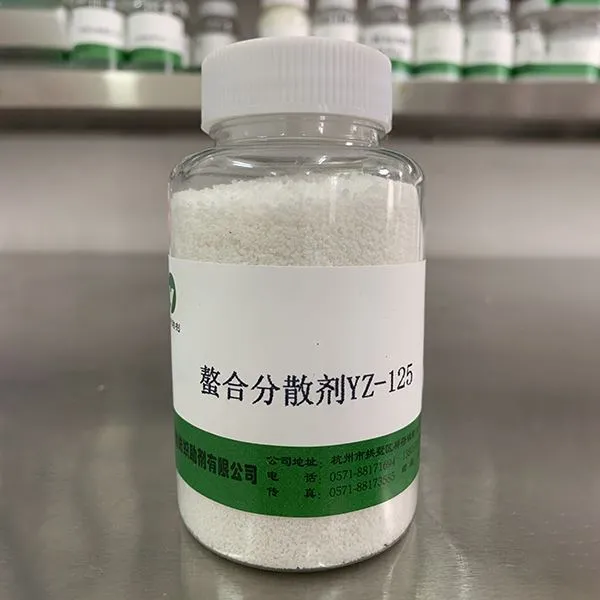

In water treatment, maintaining the right pH is important for the efficiency of the treatment process. If a chelating dispersant changes the pH too much, it can affect the performance of other treatment chemicals. For example, some disinfectants work best within a certain pH range. So, water treatment plants need to be careful about the type and amount of chelating dispersant they use.
Controlling the pH Impact
If you're worried about the pH impact of chelating dispersants, there are ways to control it. You can adjust the concentration of the chelating dispersant. Start with a small amount and gradually increase it while monitoring the pH. You can also use buffer solutions to keep the pH stable.
Another option is to choose a chelating dispersant that's known to have a minimal impact on pH. That's where our expertise as a supplier comes in. We can help you pick the right chelating dispersant for your specific application, taking into account the pH requirements.
Conclusion
So, do chelating dispersants have an impact on the pH value of solutions? The answer is yes, but it's a complex yes. It depends on the chemical nature of the dispersant, its concentration, the initial pH of the solution, and the presence of buffer systems.
If you're in an industry that uses chelating dispersants and you're struggling with pH issues, don't hesitate to reach out. We've got a wide range of chelating dispersants, including the Chelating Disperse Agent and Phosphorus Free Chelating Dispersant, and we can help you find the perfect fit for your needs. Whether you're a small business or a large industrial operation, we're here to support you. Contact us to start a discussion about your chelating dispersant requirements and let's work together to solve your problems.
References
- "Handbook of Industrial Water Conditioning" by BetzDearborn.
- "Textile Chemical Processing" by Dr. K. K. Choudhury.
- "Water Treatment Principles and Design" by David W. Chang, et al.