

Hey there! As a supplier of chelating dispersants, I've been getting a lot of questions lately about whether these nifty chemicals have an impact on the taste and odor of products. So, I thought I'd take a deep dive into this topic and share what I've learned.
First off, let's quickly go over what chelating dispersants are. Chelating dispersants are substances that can bind to metal ions and prevent them from causing problems like precipitation, discoloration, and scale formation. They're used in a wide range of industries, including water treatment, detergents, textiles, and food and beverage.
Now, onto the big question: do chelating dispersants affect the taste and odor of products? Well, the answer isn't a simple yes or no. It depends on a few factors, such as the type of chelating dispersant, the concentration used, and the nature of the product itself.
Let's start with the type of chelating dispersant. There are different types of chelating agents, including those with and without phosphorus. Phosphorus Free Chelating Dispersant are becoming increasingly popular due to environmental concerns. These dispersants are designed to perform the same chelating function without the use of phosphorus, which can be harmful to the environment. In general, phosphorus-free chelating dispersants are less likely to have a strong taste or odor because they are formulated to be more inert and less reactive.
On the other hand, some traditional chelating dispersants may have a slight odor or taste, especially if they contain certain chemical groups or impurities. For example, some older chelating agents that contain phosphates might have a faint chemical smell. However, modern manufacturing processes have significantly reduced these issues, and most commercially available chelating dispersants are odorless and tasteless when used at recommended concentrations.

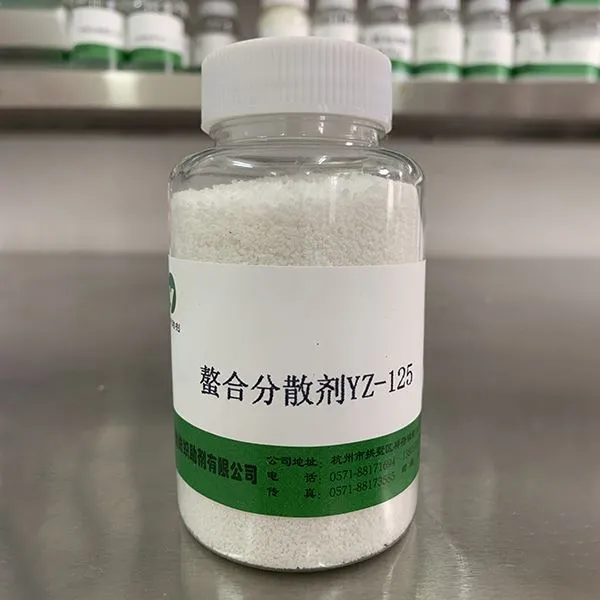
The concentration of the chelating dispersant also plays a crucial role. In most applications, chelating dispersants are used in very low concentrations. At these levels, they are highly unlikely to have any noticeable impact on the taste or odor of the product. For instance, in water treatment, chelating dispersants are added in parts per million (ppm) quantities, which is a minuscule amount. These small doses are enough to do their job of chelating metal ions without introducing any off - flavors or odors.
However, if the concentration is too high, there is a possibility of taste and odor issues. For example, in food and beverage applications, using an excessive amount of chelating dispersant could potentially lead to a metallic or chemical taste. That's why it's essential to follow the recommended usage guidelines provided by the manufacturer.
The nature of the product itself is another factor. Some products are more sensitive to the addition of chemicals than others. For example, in the food industry, products with a delicate flavor profile, like fruit juices or fine wines, are more likely to be affected by any off - flavors introduced by chelating dispersants. In contrast, products with a strong, well - defined flavor, such as a heavily spiced sauce, may be less likely to show a noticeable change in taste or odor.
In the textile industry, chelating dispersants are used to remove metal ions from fabrics during the dyeing and finishing process. These dispersants don't typically affect the smell or taste of the fabric because the fabric isn't something we usually taste or smell in a traditional sense. However, if there are residual chelating dispersants on the fabric, it could potentially cause skin irritation in some people, which is a different but related concern.
In the detergent industry, chelating dispersants help to improve the cleaning performance by preventing the formation of insoluble metal salts. Detergents are formulated with a variety of fragrances to give them a pleasant smell, and the chelating dispersant itself doesn't usually interfere with these scents. In fact, by removing metal ions that can cause discoloration and odor in fabrics, chelating dispersants can actually enhance the overall freshness of the washed items.
Let's talk about some real - world examples. In the water treatment of swimming pools, chelating dispersants are used to prevent the formation of scale on pool walls and equipment. The amount of chelating dispersant used is carefully regulated to ensure that it doesn't affect the water's taste or odor. Pool water should have a clean, fresh smell, and the proper use of chelating dispersants helps to maintain this.
In the food industry, Chelating Disperse Agent are used to prevent the oxidation of fats and oils, which can lead to rancidity and off - flavors. When used correctly, these agents can actually improve the shelf - life and taste of the food product by preventing the development of unpleasant flavors.
So, in conclusion, while chelating dispersants have the potential to affect the taste and odor of products, when used correctly and at the right concentrations, they usually don't cause any problems. As a supplier, we take great care to ensure that our chelating dispersants meet the highest quality standards and are safe for use in various applications.
If you're in an industry that could benefit from the use of chelating dispersants, whether it's water treatment, food and beverage, textiles, or detergents, I'd love to have a chat with you. We can discuss your specific needs and find the right chelating dispersant solution for your products. Don't hesitate to reach out to us to start a conversation about how our chelating dispersants can work for you.
References
- "Handbook of Industrial Water Conditioning" by BetzDearborn. This book provides in - depth information on the use of chelating agents in water treatment and their effects on water quality.
- "Food Additives: Chemistry, Technology, and Safety" edited by Fennema. It covers the use of chelating agents in the food industry and their impact on food flavor and safety.
- "Textile Chemical Processing" by Vigo. This resource explains the role of chelating dispersants in the textile manufacturing process and their interaction with fabrics.