

As a leading supplier of chelating dispersants, I often get asked about how these remarkable chemicals interact with metal ions. Understanding this interaction is crucial for various industries, from water treatment to textile processing, as it directly impacts the performance and efficiency of many processes. In this blog post, I'll delve into the science behind the interaction between chelating dispersants and metal ions, and explain why our products are the top choice for businesses worldwide.
The Basics of Chelation
Chelation is a chemical process where a chelating agent forms a complex with a metal ion. This complex is held together by coordinate covalent bonds, which are formed when the chelating agent donates a pair of electrons to the metal ion. The resulting complex is often referred to as a chelate.
Chelating agents are typically organic compounds with multiple donor atoms, such as oxygen, nitrogen, or sulfur. These donor atoms are capable of forming coordinate covalent bonds with metal ions, effectively "trapping" the metal ion within the chelate complex. The stability of the chelate complex depends on several factors, including the number of donor atoms, the geometry of the chelating agent, and the nature of the metal ion.
How Chelating Dispersants Work
Chelating dispersants combine the functions of chelation and dispersion. While chelation involves binding to metal ions, dispersion refers to the ability to keep particles, including metal-containing particles, suspended in a liquid medium. This dual functionality makes chelating dispersants highly effective in preventing the precipitation and deposition of metal ions and particles.
When a chelating dispersant is added to a solution containing metal ions, the chelating groups on the dispersant molecule bind to the metal ions, forming chelate complexes. At the same time, the dispersant's polymer chains interact with other particles in the solution, preventing them from aggregating and settling out. This keeps the metal ions and particles evenly distributed throughout the solution, preventing scale formation, fouling, and other issues associated with metal ion precipitation.
Factors Affecting the Interaction
Several factors can influence the interaction between chelating dispersants and metal ions. These include:
- pH: The pH of the solution can significantly affect the chelation process. Different chelating agents have optimal pH ranges for effective chelation. For example, some chelating agents may be more effective at acidic pH, while others work better in alkaline conditions.
- Temperature: Temperature can also impact the chelation process. Higher temperatures generally increase the rate of chelation, but they can also affect the stability of the chelate complex. In some cases, high temperatures may cause the chelate complex to break down, releasing the metal ions.
- Metal Ion Concentration: The concentration of metal ions in the solution can affect the chelation efficiency. At low metal ion concentrations, the chelating dispersant may be able to bind to all the metal ions present, forming stable chelate complexes. However, at high metal ion concentrations, the chelating dispersant may become saturated, leading to incomplete chelation and the formation of insoluble metal precipitates.
- Presence of Other Substances: The presence of other substances in the solution, such as salts, acids, or bases, can also affect the interaction between chelating dispersants and metal ions. Some substances may compete with the chelating dispersant for binding to the metal ions, while others may enhance the chelation process.
Applications of Chelating Dispersants
Chelating dispersants have a wide range of applications in various industries. Some of the most common applications include:
- Water Treatment: In water treatment, chelating dispersants are used to prevent the precipitation of metal ions, such as calcium, magnesium, and iron, which can cause scale formation in pipes, boilers, and other equipment. By keeping the metal ions in solution, chelating dispersants help to maintain the efficiency and longevity of water treatment systems.
- Textile Processing: In textile processing, chelating dispersants are used to remove metal ions from fabrics, which can cause discoloration and other quality issues. Chelating dispersants also help to prevent the precipitation of metal ions during dyeing and finishing processes, ensuring uniform coloration and high-quality results.
- Detergent Industry: In the detergent industry, chelating dispersants are used to enhance the cleaning performance of detergents by preventing the precipitation of metal ions, which can reduce the effectiveness of detergents and cause staining on fabrics. Chelating dispersants also help to prevent the formation of soap scum and other deposits in washing machines.
- Metalworking: In metalworking, chelating dispersants are used to prevent the corrosion and oxidation of metal surfaces by forming a protective layer on the metal surface. Chelating dispersants also help to remove metal chips and other debris from metalworking fluids, improving the performance and longevity of the fluids.
Our Chelating Dispersant Products
At our company, we offer a wide range of high-quality chelating dispersants to meet the diverse needs of our customers. Our products are formulated using the latest technology and are designed to provide excellent chelation and dispersion performance in various applications.
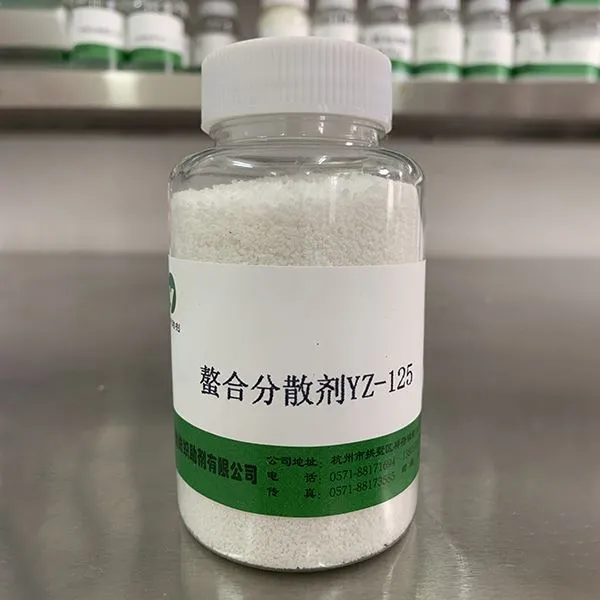
One of our popular products is the Chelating Disperse Agent. This product is a versatile chelating dispersant that can effectively bind to a wide range of metal ions, including calcium, magnesium, iron, and copper. It also has excellent dispersion properties, preventing the aggregation and precipitation of metal-containing particles.
Another product in our portfolio is the Phosphorus Free Chelating Dispersant. This product is an environmentally friendly alternative to traditional phosphorus-containing chelating dispersants. It offers similar performance to phosphorus-containing products but without the environmental concerns associated with phosphorus pollution.

Conclusion
The interaction between chelating dispersants and metal ions is a complex but fascinating process. By understanding the science behind this interaction, businesses can make informed decisions about the use of chelating dispersants in their processes. At our company, we are committed to providing our customers with the highest quality chelating dispersants and excellent technical support. If you are interested in learning more about our products or have any questions about chelating dispersants, please feel free to contact us. We look forward to discussing your specific needs and helping you find the best solution for your business.
References
- Atkins, P., & de Paula, J. (2014). Physical Chemistry. Oxford University Press.
- Housecroft, C. E., & Sharpe, A. G. (2012). Inorganic Chemistry. Pearson.
- Schubert, U. S., & Pedersen, D. F. (2007). Chelating Agents and Metal Chelates. Elsevier.