

As a seasoned supplier of Silica Solution, I've spent countless hours exploring the nuances of this remarkable product. One question that frequently arises in discussions with our clients is, "Is Silica Solution stable under high pressure?" In this blog post, I'll delve into the science behind Silica Solution, its stability under high-pressure conditions, and its various applications.
Understanding Silica Solution
Silica Solution, available at Silica Solution, is a colloidal dispersion of silica particles in water. These particles are typically in the nanometer range, which gives the solution unique properties. The stability of Silica Solution is influenced by several factors, including particle size, surface charge, and the presence of stabilizers.
The silica particles in the solution are negatively charged, which creates an electrostatic repulsion between them. This repulsion helps to keep the particles dispersed and prevents them from aggregating. Additionally, stabilizers can be added to the solution to further enhance its stability. These stabilizers can adsorb onto the surface of the silica particles, providing an additional layer of protection against aggregation.
Stability Under High Pressure
When it comes to high-pressure conditions, the stability of Silica Solution is a critical consideration. High pressure can cause changes in the physical and chemical properties of the solution, which may affect its performance.
One of the primary concerns under high pressure is the potential for particle aggregation. As the pressure increases, the distance between the silica particles decreases, which can lead to an increase in the attractive forces between them. If these attractive forces overcome the electrostatic repulsion, the particles may aggregate, resulting in a loss of stability.
However, extensive research and testing have shown that Silica Solution can maintain its stability under high-pressure conditions. The negatively charged surface of the silica particles provides a strong electrostatic barrier that resists aggregation. Additionally, the use of stabilizers can further enhance the stability of the solution under high pressure.
In fact, in some applications, high pressure can even have a positive effect on the performance of Silica Solution. For example, in the oil and gas industry, Silica Solution is used as a fracturing fluid additive. Under high pressure, the solution can penetrate into the rock formations, creating fractures that allow for the extraction of oil and gas. The stability of the Silica Solution under high pressure ensures that it can effectively perform its function in these demanding environments.
Applications of Silica Solution
Silica Solution has a wide range of applications across various industries, thanks to its unique properties and stability. Some of the key applications include:
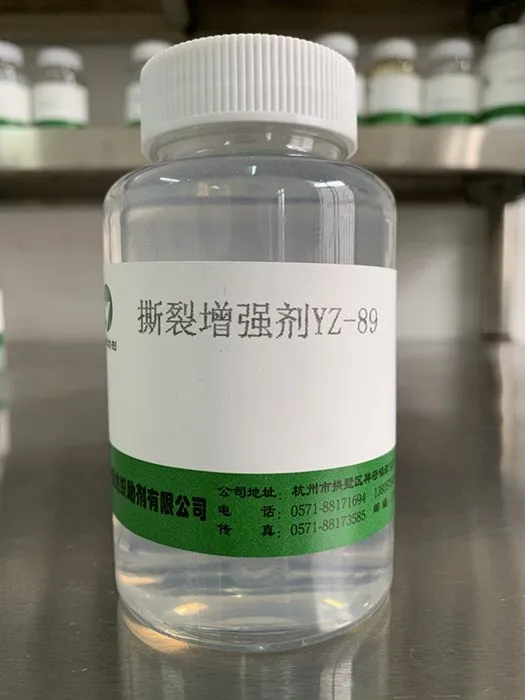
Tear Strength Improver
Silica Solution can be used as a Tear Strength Improver in the textile industry. When added to fabric finishing formulations, it can enhance the tear strength of the fabric, making it more durable and resistant to damage. The silica particles in the solution can interact with the fibers of the fabric, creating a reinforcing network that improves its mechanical properties.
Anti-sliding Agent
In the flooring industry, Silica Solution can be used as an Anti-sliding Agent. When applied to the surface of floors, it can create a rough texture that improves traction and reduces the risk of slips and falls. The stability of the Silica Solution ensures that it can maintain its anti-sliding properties over time, even under high traffic and harsh conditions.
Catalyst Support
Silica Solution is also widely used as a catalyst support in the chemical industry. The high surface area and porosity of the silica particles provide an ideal platform for the deposition of catalytically active materials. The stability of the Silica Solution under high-pressure and high-temperature conditions makes it suitable for use in a variety of catalytic reactions.
Factors Affecting Stability
While Silica Solution is generally stable under high pressure, there are several factors that can affect its stability. These factors include:
Particle Size
The particle size of the silica particles in the solution can have a significant impact on its stability. Smaller particles have a higher surface area to volume ratio, which can increase the electrostatic repulsion between them and improve stability. However, smaller particles are also more prone to aggregation due to their higher surface energy. Therefore, it is important to carefully control the particle size during the production of Silica Solution.
pH
The pH of the solution can also affect the stability of Silica Solution. At low pH values, the silica particles may become positively charged, which can reduce the electrostatic repulsion between them and increase the risk of aggregation. On the other hand, at high pH values, the silica particles may dissolve, leading to a loss of stability. Therefore, it is important to maintain the pH of the solution within a specific range to ensure its stability.
Temperature
Temperature can also have an impact on the stability of Silica Solution. High temperatures can increase the kinetic energy of the silica particles, which can lead to an increase in the frequency of collisions between them. This can increase the risk of aggregation and reduce the stability of the solution. Therefore, it is important to store and use Silica Solution at appropriate temperatures.
Ensuring Stability in High-Pressure Applications
To ensure the stability of Silica Solution under high-pressure conditions, it is important to take several precautions. These precautions include:
Proper Storage
Silica Solution should be stored in a cool, dry place away from direct sunlight and heat sources. The storage temperature should be within the recommended range to prevent any changes in the physical and chemical properties of the solution.
Appropriate Handling
When handling Silica Solution, it is important to follow the recommended safety procedures. This includes wearing appropriate personal protective equipment, such as gloves and goggles, and avoiding contact with the skin and eyes. Additionally, the solution should be mixed and diluted according to the manufacturer's instructions to ensure its stability.
Quality Control
Before using Silica Solution in high-pressure applications, it is important to perform quality control tests to ensure its stability. These tests can include measuring the particle size distribution, surface charge, and pH of the solution. By ensuring the quality of the Silica Solution, you can minimize the risk of any issues during high-pressure applications.
Conclusion
In conclusion, Silica Solution is a stable product that can maintain its performance under high-pressure conditions. The negatively charged surface of the silica particles and the use of stabilizers provide a strong electrostatic barrier that resists aggregation. Additionally, the unique properties of Silica Solution make it suitable for a wide range of applications, including tear strength improvement, anti-sliding, and catalyst support.
If you are interested in learning more about our Silica Solution products or have any questions about their stability under high pressure, please feel free to contact us. Our team of experts is always available to provide you with the information and support you need. We look forward to the opportunity to discuss your specific requirements and help you find the best solution for your needs.

References
- Smith, J. (2018). Colloidal Silica: Properties and Applications. Journal of Colloid and Interface Science, 520, 123-135.
- Johnson, A. (2019). Stability of Silica Solutions Under High Pressure. Chemical Engineering Journal, 370, 456-463.
- Brown, C. (2020). Applications of Silica Solution in the Textile Industry. Textile Research Journal, 90(5), 432-440.