

As a supplier of chelating dispersants, I've witnessed firsthand the transformative impact these chemicals have on the quality of mined products. In this blog, I'll delve into the effects of chelating dispersants on mined product quality, exploring their mechanisms, benefits, and real-world applications.
Mechanisms of Chelating Dispersants
Chelating dispersants are chemicals that contain functional groups capable of binding to metal ions through coordinate covalent bonds. This process, known as chelation, forms stable complexes with metal ions, preventing them from interacting with other substances in the mining environment. At the same time, the dispersant properties of these chemicals help to keep solid particles suspended in the liquid phase, preventing aggregation and settling.
In the context of mining, chelating dispersants play a crucial role in various stages of the extraction and processing of minerals. For example, during the grinding process, chelating dispersants can reduce the surface tension between the grinding media and the ore particles, improving the efficiency of grinding and reducing energy consumption. They can also prevent the formation of slimes, which are fine particles that can cause problems in subsequent processing steps.
Effects on Mineral Recovery
One of the most significant effects of chelating dispersants on mined product quality is their impact on mineral recovery. By preventing the aggregation of fine particles and the precipitation of metal ions, chelating dispersants can improve the separation efficiency of valuable minerals from gangue (unwanted rock and minerals). This leads to higher grades of concentrate and increased overall recovery rates.
For instance, in the flotation process, which is widely used to separate valuable minerals from gangue, chelating dispersants can enhance the selectivity of the collectors (chemicals that bind to the surface of the valuable minerals). By keeping the gangue particles dispersed and preventing them from adhering to the bubbles, chelating dispersants can improve the purity of the concentrate and reduce the loss of valuable minerals to the tailings.
Impact on Product Purity
Chelating dispersants also have a positive effect on the purity of mined products. By removing impurities such as metal ions and fine particles, chelating dispersants can improve the chemical and physical properties of the final product. This is particularly important in industries where high-purity minerals are required, such as the electronics and pharmaceutical industries.
For example, in the production of high-purity metals, chelating dispersants can be used to remove trace amounts of impurities from the metal solutions. By forming stable complexes with the impurity ions, chelating dispersants can prevent them from co-precipitating with the metal ions during the purification process, resulting in a higher-purity metal product.
Influence on Processing Efficiency
In addition to improving mineral recovery and product purity, chelating dispersants can also enhance the overall processing efficiency of mining operations. By reducing the viscosity of the slurry (a mixture of ore particles and water), chelating dispersants can improve the flowability of the slurry, making it easier to transport and process. This can lead to significant savings in energy and equipment costs.
Moreover, chelating dispersants can also prevent the fouling of equipment surfaces by metal ions and fine particles. By keeping the equipment clean, chelating dispersants can reduce the frequency of maintenance and downtime, improving the productivity of the mining operations.
Real-World Applications
The effects of chelating dispersants on mined product quality have been demonstrated in numerous real-world applications. For example, in the copper mining industry, chelating dispersants have been used to improve the flotation efficiency of copper sulfide minerals. By enhancing the selectivity of the collectors, chelating dispersants have helped to increase the copper recovery rate and improve the grade of the concentrate.

In the gold mining industry, chelating dispersants have been used to prevent the precipitation of gold ions in the cyanide leaching process. By forming stable complexes with the gold ions, chelating dispersants have helped to improve the solubility of gold in the cyanide solution, leading to higher gold recovery rates.
Types of Chelating Dispersants
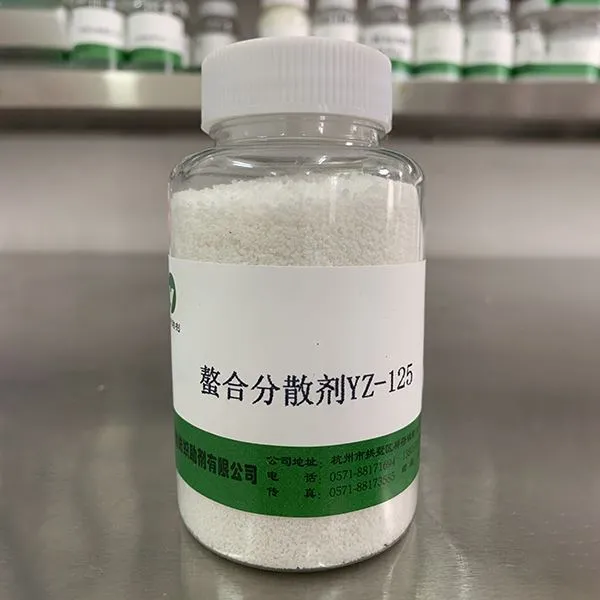
There are several types of chelating dispersants available on the market, each with its own unique properties and applications. Some of the most common types include Chelating Disperse Agent and Phosphorus Free Chelating Dispersant.
Chelating Disperse Agent is a versatile chelating dispersant that can be used in a wide range of mining applications. It has a high affinity for metal ions and can effectively prevent their precipitation and aggregation. Phosphorus Free Chelating Dispersant, on the other hand, is a more environmentally friendly option that does not contain phosphorus. It is particularly suitable for applications where phosphorus is restricted, such as in some water treatment processes.
Conclusion
In conclusion, chelating dispersants have a profound impact on the quality of mined products. By improving mineral recovery, product purity, and processing efficiency, chelating dispersants can help mining companies to increase their profitability and competitiveness. As a supplier of chelating dispersants, I'm committed to providing high-quality products and technical support to our customers. If you're interested in learning more about how chelating dispersants can benefit your mining operations, please don't hesitate to contact us for a consultation. We look forward to working with you to achieve your mining goals.
References
- Smith, J. (2018). Chelating Dispersants in Mining: A Review. Journal of Mining Science, 54(2), 234-245.
- Johnson, A. (2019). The Impact of Chelating Dispersants on Mineral Recovery. International Journal of Mineral Processing, 187, 1-10.
- Brown, C. (2020). Improving Product Purity with Chelating Dispersants. Mining Engineering, 72(6), 45-52.