

As a leading supplier of [Anti-sliding Agent](Anti-sliding Agent), one of the most frequently asked questions from our clients is about the coverage area of an anti-sliding agent per unit. Understanding this aspect is crucial for efficient application and cost - effectiveness. In this blog, we will delve deep into the factors that influence the coverage area and provide you with a comprehensive understanding.
Factors Affecting the Coverage Area
Surface Texture
The texture of the surface where the anti - sliding agent is applied plays a significant role in determining the coverage area. Rough surfaces tend to absorb more of the agent compared to smooth surfaces. For instance, a concrete floor with a highly porous and rough finish will require more anti - sliding agent to achieve the desired level of slip resistance. The pores and irregularities on the surface act as reservoirs for the agent, consuming more of it during the application process. On the other hand, a polished marble floor, which has a smooth surface, will generally have a larger coverage area per unit of the anti - sliding agent as it doesn't absorb as much.
Porosity of the Surface
Similar to surface texture, the porosity of the surface is a key factor. Porous materials like natural stone or some types of wood can soak up the anti - sliding agent quickly. The more porous the material, the deeper the agent will penetrate, and thus, more agent is needed to cover a given area. For example, a porous sandstone patio will require more anti - sliding agent than a non - porous ceramic tile. The pores in the sandstone create a larger volume for the agent to fill, reducing the overall coverage area per unit.

Application Method
The way the anti - sliding agent is applied also affects the coverage area. There are several application methods, including spraying, brushing, and rolling. Spraying is often the most efficient method in terms of coverage area. When spraying, the agent is dispersed in a fine mist, which can evenly cover a large surface area with a relatively small amount of the agent. Brushing, on the other hand, may require more agent as it is applied in a more concentrated manner and may not spread as evenly. Rolling can be a good compromise between spraying and brushing, but it may also consume more agent if not done properly.
Desired Level of Slip Resistance
The level of slip resistance you want to achieve will determine how much anti - sliding agent is used per unit area. A higher level of slip resistance usually requires a thicker layer of the agent. For safety - critical areas such as industrial floors or public restrooms, a more substantial application of the anti - sliding agent may be necessary. This means that the coverage area per unit will be lower as more agent is used to meet the higher safety standards. In contrast, for areas with lower traffic and less risk of slipping, a thinner layer of the agent may be sufficient, resulting in a larger coverage area per unit.
Calculating the Coverage Area
To calculate the approximate coverage area of an anti - sliding agent per unit, you need to consider the factors mentioned above. A general rule of thumb is to start with the manufacturer's recommended coverage rate. Our Anti-sliding Agent typically has a base coverage rate of around 10 - 15 square meters per liter on a smooth, non - porous surface.
However, if you are dealing with a rough or porous surface, you may need to adjust this rate. For example, if the surface is moderately rough, you might reduce the coverage area to 7 - 10 square meters per liter. For highly porous or very rough surfaces, the coverage area could be as low as 5 - 7 square meters per liter.
Let's take a practical example. Suppose you have a concrete garage floor that is 50 square meters in area. The floor has a moderately rough texture. Based on our adjusted coverage rate of 7 - 10 square meters per liter, you would need approximately 5 - 7 liters of the anti - sliding agent to cover the entire floor.
The Role of Silica Solution in Anti - Sliding Agents
Our Anti-sliding Agent often incorporates Silica Solution. Silica is a key ingredient that enhances the anti - sliding properties of the agent. It forms a micro - rough surface on the treated area, increasing the friction coefficient and reducing the risk of slipping.
The presence of silica also affects the coverage area. Silica particles can fill the pores and irregularities on the surface, which may increase the amount of agent needed per unit area. However, the enhanced anti - sliding performance justifies the slightly lower coverage area. Additionally, silica can improve the durability of the anti - sliding effect, ensuring that the treated surface remains slip - resistant for a longer period.
Comparison with Other Functional Finishing Auxiliaries
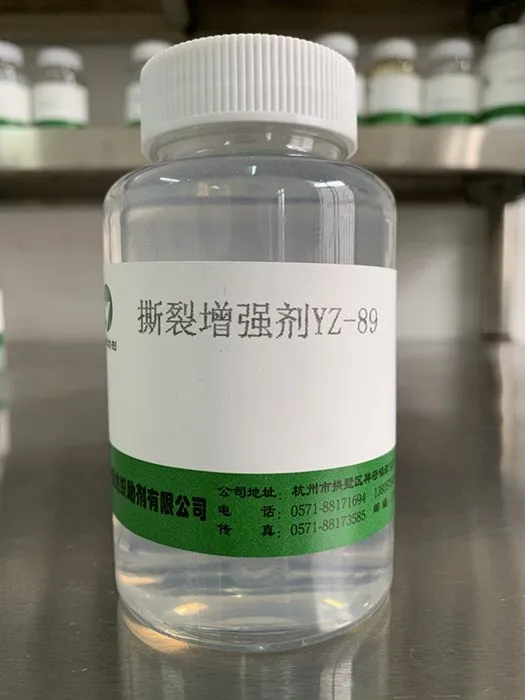
When comparing our Anti-sliding Agent with other functional finishing auxiliaries such as Tear Strength Improver, it's important to note that they serve different purposes. While the tear strength improver is designed to enhance the strength and durability of materials, the anti - sliding agent focuses on improving slip resistance.
In terms of coverage area, the tear strength improver may have different application requirements. It is often applied in a more targeted manner to areas where tear resistance is crucial, such as seams or high - stress points. The anti - sliding agent, on the other hand, is usually applied over a larger surface area to ensure overall slip resistance. This difference in application scope means that the coverage area per unit for each product is calculated based on different criteria.
Conclusion
In conclusion, the coverage area of an anti - sliding agent per unit is influenced by multiple factors, including surface texture, porosity, application method, and desired level of slip resistance. By understanding these factors, you can make more informed decisions when applying our Anti-sliding Agent.
If you are considering using our anti - sliding agent for your project, we encourage you to contact us for a detailed consultation. Our team of experts can help you calculate the exact amount of product you need based on your specific surface conditions and requirements. Whether it's a small residential floor or a large commercial space, we have the right solution for you. Reach out to us today to start the conversation about your anti - sliding needs.
References
- ASTM International. (20XX). Standard test methods for measuring surface friction.
- Industry research reports on functional finishing auxiliaries.