

How do chelating dispersants improve the dyeing process?
In the textile dyeing industry, achieving high - quality, consistent, and efficient dyeing results is of utmost importance. Chelating dispersants play a crucial role in enhancing the dyeing process, and as a chelating dispersant supplier, I am well - versed in their benefits and functions.
Understanding Chelating Dispersants
Chelating dispersants are chemical agents that have the ability to form stable complexes with metal ions through chelation and also disperse various substances in a solution. In the context of dyeing, they interact with metal ions present in the dyeing bath, such as calcium, magnesium, iron, and copper. These metal ions can come from the water used in the dyeing process, the fabric itself, or the dyeing equipment.
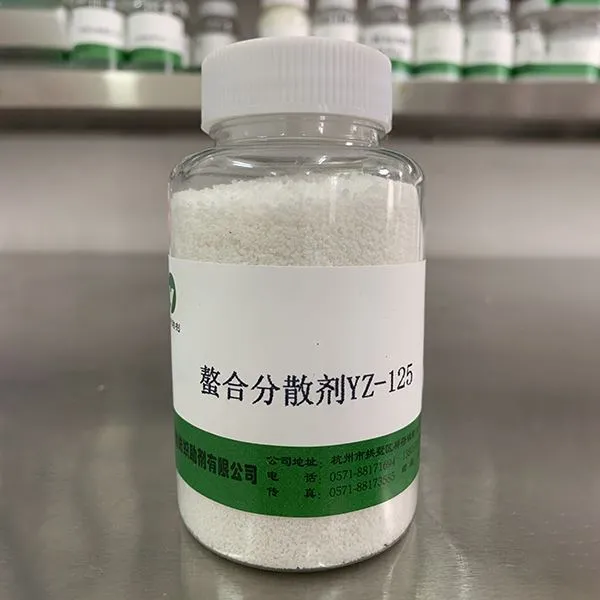
The Chelating Disperse Agent we supply is designed to have strong chelating and dispersing properties. It can effectively capture metal ions, preventing them from interfering with the dyeing process. For example, iron ions can cause color variations and uneven dyeing, while calcium and magnesium ions can form precipitates with dyes or other chemicals in the bath, leading to poor dye penetration and reduced color fastness.
Improving Dye Solubility and Dispersion
One of the primary ways chelating dispersants improve the dyeing process is by enhancing dye solubility and dispersion. Dyes need to be uniformly dispersed in the dyeing bath to ensure even coloration of the fabric. Many dyes have a tendency to aggregate or form clusters, especially in the presence of metal ions. Chelating dispersants surround the dye molecules, preventing them from clumping together.
They act as a protective layer around the dye particles, keeping them in a stable, dispersed state. This ensures that the dye can be evenly distributed throughout the fabric during the dyeing process. Our Phosphorus Free Chelating Dispersant is particularly effective in this regard. It not only disperses dyes but also helps to dissolve them more effectively, allowing for better uptake by the fabric fibers.
Preventing Metal - Related Issues
As mentioned earlier, metal ions can cause a range of problems in the dyeing process. Chelating dispersants bind to these metal ions, forming soluble complexes. This prevents the metal ions from reacting with dyes, auxiliaries, or the fabric itself.
For instance, in hard water areas where calcium and magnesium ion concentrations are high, these ions can react with anionic dyes to form insoluble salts. This leads to a loss of dye in the form of precipitates, reduced dye utilization, and uneven coloration. By chelating these metal ions, our chelating dispersants ensure that the dye remains in a soluble and reactive form, maximizing its effectiveness in the dyeing process.
In addition, metal ions can catalyze oxidation reactions in the dyeing bath, which can degrade dyes and reduce their color strength. Chelating dispersants sequester these metal ions, protecting the dyes from oxidation and maintaining their color stability.

Enhancing Color Fastness
Color fastness is a critical quality parameter in textile dyeing. It refers to the ability of a dyed fabric to retain its color under various conditions, such as washing, rubbing, and exposure to light. Chelating dispersants contribute to improved color fastness in multiple ways.
First, by ensuring even dye distribution and penetration into the fabric fibers, they help to create a more uniform and stable color. When dyes are evenly distributed, they are less likely to be removed during washing or other post - dyeing treatments. Second, by preventing metal - related degradation of dyes, chelating dispersants maintain the integrity of the dye molecules within the fabric. This means that the color is more resistant to fading over time.
Improving Dye Uptake and Exhaustion
Dye uptake refers to the amount of dye that is absorbed by the fabric from the dyeing bath, while exhaustion is the percentage of dye that is used up in the dyeing process. Chelating dispersants can improve both dye uptake and exhaustion.
They help to create a more favorable environment for dye - fiber interactions. By dispersing dyes and removing metal - related obstacles, the dyes can more easily approach and bind to the fabric fibers. This results in a higher percentage of dye being absorbed by the fabric, increasing dye uptake.
In terms of exhaustion, chelating dispersants prevent dye loss due to precipitation or degradation. As a result, more of the dye in the bath is effectively used in the dyeing process, leading to higher exhaustion rates. This not only improves the efficiency of the dyeing process but also reduces the environmental impact by minimizing the amount of unused dye that is discharged into wastewater.
Compatibility with Different Dyeing Systems
Our chelating dispersants are designed to be compatible with a wide range of dyeing systems, including reactive dyes, disperse dyes, acid dyes, and direct dyes. Different dyes have different chemical properties and require specific conditions for optimal dyeing. Our chelating dispersants can be adjusted to meet the requirements of each dyeing system.
For example, in reactive dyeing, where dyes react with the fabric fibers to form covalent bonds, chelating dispersants ensure that the reaction proceeds smoothly by removing metal ions that could interfere with the reaction. In disperse dyeing, which is commonly used for synthetic fibers, they help to disperse the hydrophobic disperse dyes in the aqueous dyeing bath, facilitating their transfer to the fabric.
Environmental Considerations
In today's textile industry, environmental sustainability is a major concern. Our Phosphorus Free Chelating Dispersant is an environmentally friendly option. Phosphorus - containing chemicals can contribute to eutrophication in water bodies when discharged into wastewater. By using a phosphorus - free chelating dispersant, textile manufacturers can reduce their environmental impact while still achieving high - quality dyeing results.
Conclusion
Chelating dispersants are essential components in modern textile dyeing processes. They offer a wide range of benefits, from improving dye solubility and dispersion to enhancing color fastness and reducing environmental impact. As a chelating dispersant supplier, we are committed to providing high - quality products that meet the diverse needs of the textile industry.
If you are involved in textile dyeing and are looking for reliable chelating dispersants to improve your dyeing process, we invite you to contact us for a detailed discussion. Our team of experts can provide you with tailored solutions based on your specific requirements.
References
- Zollinger, H. (2003). Color Chemistry: Synthesis, Properties and Applications of Organic Dyes and Pigments. Wiley - VCH.
- Lewis, D. M. (2011). The Theory of Textile Dyeing. Society of Dyers and Colourists.
- Carew, A. F. (2008). Handbook of Textile and Industrial Dyeing. Elsevier.